Faith and religious orders
Styles required or chosen for religious reasons: kesh, the tonsure, the payot. 29 hairstyles on EveryHairstyle so far.
Hair has a place in almost every faith. Some ask believers to keep it uncut, like Sikh kesh and the locks of the Rastafari; some to shave it, like Buddhist monks and nuns and Hindus making offerings; some to leave a part, like the Jewish payot and the Hindu shikha; and some to cover it, as many Muslim, Jewish and Christian women do. These customs are described here with respect and as their communities understand them.
Kept, shaved or covered
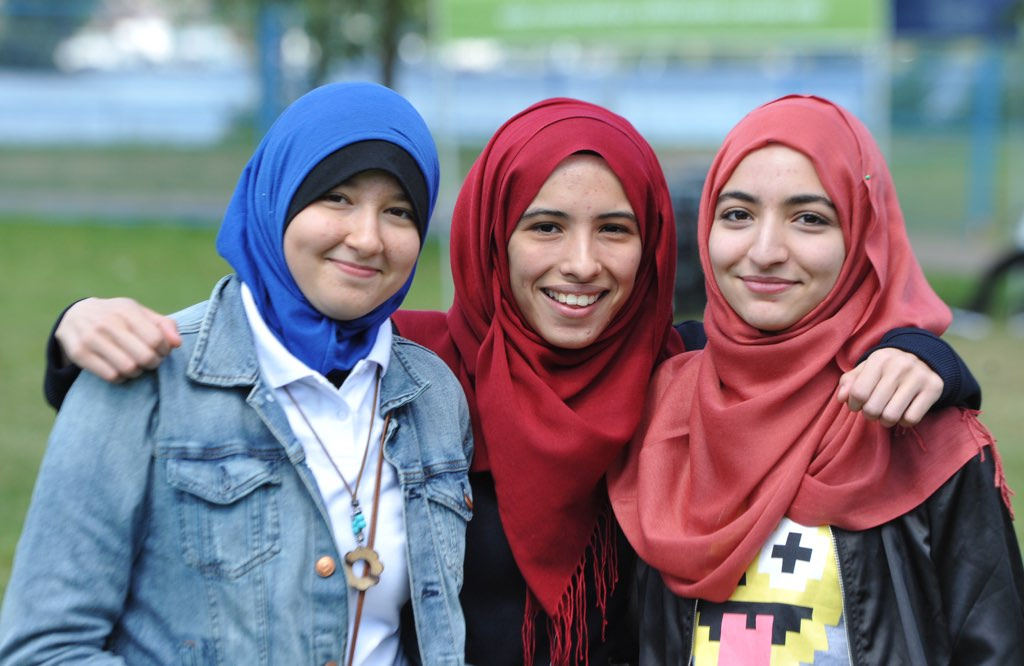
Sikhs keep kesh, uncut hair, as one of the five Ks and cover it with a dastar. Many Hindu men keep a shikha, and Hindus shave their heads at temples, at a child's mundan and in mourning. Buddhist monastics shave at ordination. Many Orthodox Jewish men grow payot, and married women cover their hair. Many Muslim women wear a hijab, and Muslim men shave or trim their hair at the end of the Hajj. Rastafari grow locks under the Nazirite vow.
Faith and rules
Religious hair practices have often met rules of schools, armies and employers. Sikh soldiers have long served in turbans in the Indian Army and, after legal campaigns, are allowed to in the American and Canadian forces. Rastafarian students have gone to court over locs in Jamaica, Ghana and Britain. Rules on headscarves in schools and public jobs are debated in several countries, with arguments about religious freedom on one side and secularism or neutrality on the other.
Famous faith and religious orders hairstyles


Further reading
 🇻🇳 VietnamKhăn vấn
A traditional Vietnamese head wrap coiled tightly around the hair.Wrapped · Any hair · 1744
 🇷🇴 Romania and 4 moreChristian head covering
A cloth veil worn by Christian women for modesty and worship.Wrapped · Any hair
 🇨🇳 China and 1 moreBuyao
A Chinese hairpin with dangling ornaments that sway when the wearer moves.Adorned · Any hair
 🇨🇳 ChinaChinese hairpin
Traditional Chinese hair ornaments used to secure buns and signify status.Adorned · Any hair
South AsiaPatka
Square cotton head covering worn by Sikh men and boys.Wrapped · Any hair
 🇬🇧 United KingdomSnood
A net or cloth bag that holds hair at the back of the head.Wrapped · Any hair · 1590
 🇺🇦 UkraineUkrainian wreath
Traditional floral headdress for Ukrainian girls and unmarried womenWrapped · Any hair
 🇮🇳 India and 3 moreDastar
A turban worn by Sikhs to cover uncut hair and signify faith.Wrapped · Any hair · 1699
 🇮🇳 IndiaHead shaving in Hinduism
A ritual act of head shaving in Hinduism for purification, mourning, and devotion.Shaved · Any hair
 🇮🇳 IndiaTonsure
A religious practice of cutting or shaving scalp hair to signal devotion, humility, or clerical status.Shaved · Any hair
 🇸🇩 Sudan and 4 moreDreadlocks
A hairstyle of rope-like hair strands formed by matting or twisting.Natural · Coily and kinky hair · 1970
 WorldLong hair
Head hair grown to a considerable length, often past the shoulders.Styled · Any hair
 🇪🇬 EgyptSidelock of youth
Ancient Egyptian braided side hair worn by royal children.Braid · Any hair
 🇮🇳 IndiaShikha
A traditional Hindu tuft of hair kept at the crown after shaving the rest of the head.Shaved · Any hair
 EuropeRoman hairstyles
Ancient Roman hair fashions reflecting status and identityUpdo · Any hair
 🇺🇸 United States and 3 moreHair extensions
Cosmetic additions of human or synthetic hair attached to natural hair for length and volume.Styled · Any hair · 1950
WorldHistorical Christian hairstyles
A survey of hair practices in Christianity from antiquity to the early modern period.Shaved · Any hair
 🇪🇬 Egypt and 4 moreWig
Artificial head covering made from human, animal or synthetic hair.Wrapped · Any hair
 🇮🇱 IsraelJewish headcovering
A religious practice requiring married Orthodox Jewish women to cover their hair in public.Wrapped · Any hair
🇬🇭 GhanaDensinkran
Short Ashanti mourning cut for royal womenCut · Any hair
Photo credits on this page
The small pictures above come from Wikimedia Commons under free licences. Some are cropped to fit.
- Long hair: Adam Jones Adam63, CC BY-SA 3.0, source
- Tonsure: Pietro Perugino, Public domain, source
- Dreadlocks: Richard Mortel, CC BY 2.0, source
- Sidelock of youth: Unknown artist, CC BY-SA 3.0, source
- Snood: Adolph von Menzel, Public domain, source
- Ukrainian wreath: Samuil Dudin (1863-1929), Public domain, source
- Dastar: Photography by Harkanwal Singh., CC BY-SA 2.5, source
- Head shaving in Hinduism: Napoleon is back, CC0, source
- Christian head covering: Petar Milošević, CC BY-SA 3.0, source
- Khăn vấn: André Salles, Public domain, source
- Buyao: anonymous, Public domain, source
- Jewish headcovering: David Shankbone, CC BY-SA 3.0, source
- Shikha: Internet Archive Book Images, No restrictions, source
- Payot: Mark Neyman, CC BY-SA 3.0, source
- Wig: David Ring, CC0, source
- Hair extensions: Eunicehair, CC BY-SA 4.0, source
- Kesh: Carl W. Damman, Public domain, source
- Chinese hairpin: Augusthaiho, CC BY-SA 4.0, source
- Roman hairstyles: Colchester Museums, Caroline McDonald, 2004-06-02 14:47:52, CC BY-SA 4.0, source
- Hijab: Sophie Barat, CC BY 2.0, source