Hijab
A head covering worn by Muslim women to signify modesty and faith.
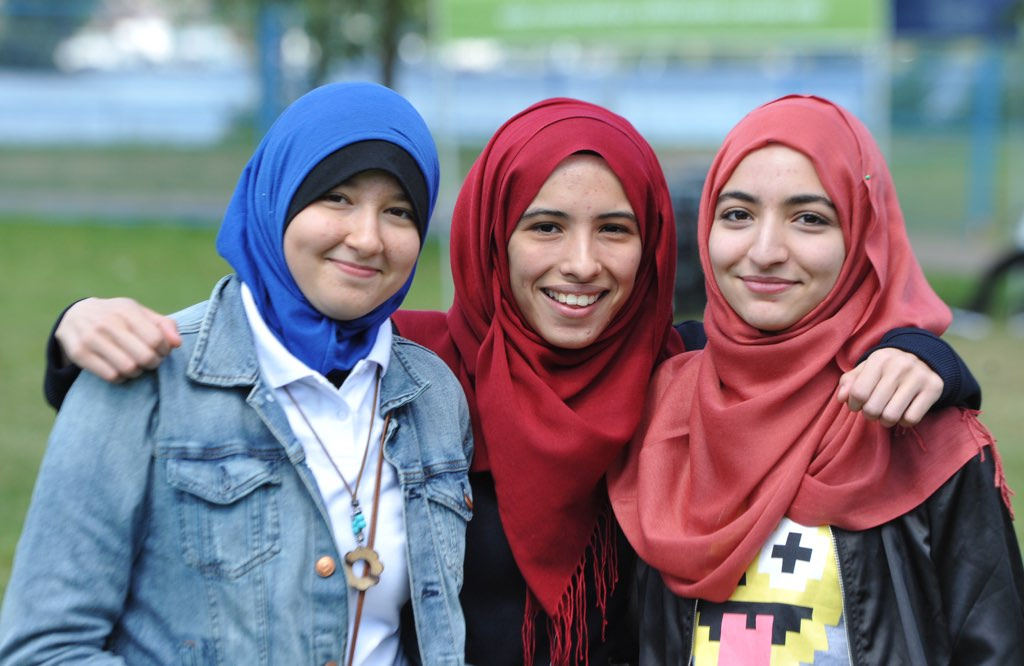
The hijab is a term for inner modesty in Islam, commonly referring to the headscarf worn by Muslim women. It covers hair, neck, and ears while leaving the face exposed. Its use varies globally based on local laws and cultural interpretations.
- The word hijab means curtain or barrier in Arabic.
- It covers hair, neck, and ears while leaving the face exposed.
- Qur'anic verses mention khimar and jilbab for modesty.
- Veiling existed in pre-Islamic Arabia among elite classes.
- Some countries mandate it, while others ban it.
What it is
The hijab is a head covering worn by many Muslim women. It typically wraps around the head to hide the hair, neck, and ears. The face remains visible. The word originally means curtain or barrier in Arabic. It represents a broader concept of modesty in Islamic life. Women wear it as an act of faith and privacy. Styles vary by region and personal choice. Some cover only the head, while others include additional garments like the jilbab.
Where it comes from
The term appears in the Qur'an, often meaning a physical partition rather than clothing. Early Islamic texts used it for curtains separating spaces. Veiling existed in pre-Islamic Arabia among higher social classes. Over time, jurists developed rules based on scripture and hadith. Modern usage focuses on the headscarf. The practice has grown globally since the 1970s. It serves as a symbol of identity for many believers.
What it means
It signifies haya, or bashfulness and reserve. Wearing it is seen as obedience to God and a protection from unwanted attention. For some, it is a spiritual adornment. Others view it as a political statement against Western norms. Debates exist on whether it is mandatory or optional. Some scholars argue it protects women from harassment. Others see it as a marker of free Muslim women versus slaves.
How it is made
Women drape a piece of cloth over their heads. The fabric covers the hair completely. It may be pinned or tucked to stay in place. Different cultures have specific wrapping methods. Some use undercaps to keep hair flat. The garment must cover the neck and ears. The face and hands usually remain uncovered. Materials range from light cotton to heavier wool depending on climate.
Who and what it suits
Suitable for any hair type that needs covering. Works with various face shapes as the face is visible. No specific hair texture is required. The style adapts to different climates and lifestyles. It can be worn daily or for special religious occasions.
Versions
The khimar is a headscarf mentioned in the Qur'an. The jilbab is an outer cloak worn over clothes. The niqab covers the face, leaving only the eyes visible. The chador is a full-body wrap used in Iran. The burqa covers the entire body and face with a mesh screen. Regional styles differ across South Asia, the Middle East, and Africa.
In culture
Legal requirements vary by country. Iran and Afghanistan mandate its use by law. Other nations restrict or ban it in public spaces. This creates controversy regarding human rights and religious freedom. Women face penalties for not wearing it in some places. In others, they face discrimination for wearing it. The topic influences politics and international law debates.



Questions people ask about Hijab
What does the word hijab mean?
The Arabic word hijab translates to curtain or barrier. It originally referred to a physical partition in early Islamic texts. Today, it commonly denotes the headscarf worn by Muslim women. The term also encompasses broader concepts of modesty and privacy in Islamic behavior.
Is wearing a hijab required by the Qur'an?
The Qur'an uses terms like khimar and jilbab to discuss modesty. It does not explicitly use the word hijab for clothing. Later jurists interpreted these verses to establish veiling rules. Scholars disagree on whether covering the head is strictly mandatory or recommended.
Does the hijab cover the face?
Most common forms leave the face exposed. The standard hijab covers hair, neck, and ears. Some variations like the niqab cover the face entirely. Classical interpretations often distinguish between covering the head and the face.
Why do women wear the hijab?
Many women wear it as an expression of faith and modesty. It is viewed as an act of obedience to God. Some see it as protection from harassment. Others wear it as a cultural identifier or political statement against Western influence.
Good reading and sources
- Turkey Lifts Longtime Ban on Head Scarves in State Offices (Published 2013)The New York Times, Article
- Quiet end to Turkey's college headscarf banBBC, Article
The facts on this page come from the Wikipedia article "Hijab", written by its contributors and used under the CC BY-SA 4.0 licence, and from its Wikidata record (CC0). EveryHairstyle rewrote the text in its own words, with AI assistance, and compares every page with the article to make sure no passage is copied. It may be reused under the same CC BY-SA 4.0 licence with a link back.
It may contain mistakes, and figures change over time. Nothing here is investment or buying advice. If something is wrong, tell us. Last refreshed 2026-11-15.
Like Hijab
All covered and wrapped 🇺🇦 UkraineUkrainian wreath
Traditional floral headdress for Ukrainian girls and unmarried womenWrapped · Any hair
 🇷🇴 Romania and 4 moreChristian head covering
A cloth veil worn by Christian women for modesty and worship.Wrapped · Any hair
 WorldHeadscarf
A triangular or square cloth folded to cover the hair and head while leaving the face visible.Wrapped · Any hair
 🇮🇳 IndiaGhoonghat
A headscarf worn by married women in parts of India to cover the face.Wrapped · Any hair