Faith and religious orders
Styles required or chosen for religious reasons: kesh, the tonsure, the payot. 29 hairstyles on EveryHairstyle so far.
Hair has a place in almost every faith. Some ask believers to keep it uncut, like Sikh kesh and the locks of the Rastafari; some to shave it, like Buddhist monks and nuns and Hindus making offerings; some to leave a part, like the Jewish payot and the Hindu shikha; and some to cover it, as many Muslim, Jewish and Christian women do. These customs are described here with respect and as their communities understand them.
Kept, shaved or covered
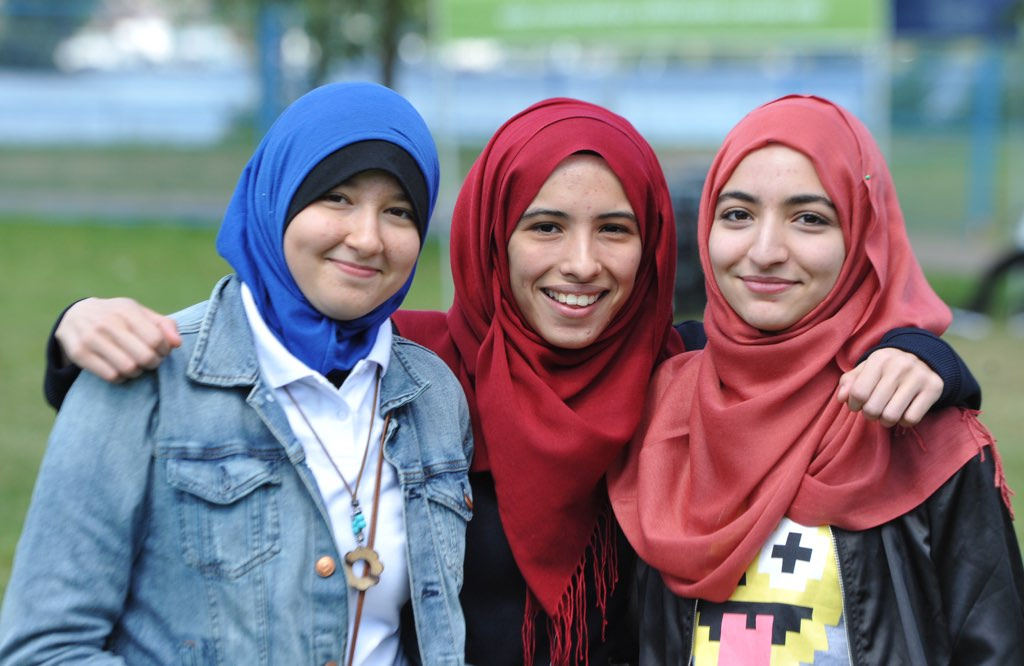
Sikhs keep kesh, uncut hair, as one of the five Ks and cover it with a dastar. Many Hindu men keep a shikha, and Hindus shave their heads at temples, at a child's mundan and in mourning. Buddhist monastics shave at ordination. Many Orthodox Jewish men grow payot, and married women cover their hair. Many Muslim women wear a hijab, and Muslim men shave or trim their hair at the end of the Hajj. Rastafari grow locks under the Nazirite vow.
Faith and rules
Religious hair practices have often met rules of schools, armies and employers. Sikh soldiers have long served in turbans in the Indian Army and, after legal campaigns, are allowed to in the American and Canadian forces. Rastafarian students have gone to court over locs in Jamaica, Ghana and Britain. Rules on headscarves in schools and public jobs are debated in several countries, with arguments about religious freedom on one side and secularism or neutrality on the other.
Famous faith and religious orders hairstyles


Further reading
 🇸🇩 Sudan and 4 moreDreadlocks
A hairstyle of rope-like hair strands formed by matting or twisting.Natural · Coily and kinky hair · 1970
 WorldLong hair
Head hair grown to a considerable length, often past the shoulders.Styled · Any hair
 WorldPayot
Sidelocks worn by Orthodox Jewish men based on religious law.Styled · Curly hair
 🇵🇱 Poland and 1 morePolish plait
A matted hair formation viewed as both a medical condition and a folk amulet in Eastern Europe.Styled · Coily and kinky hair · 1600
 🇯🇵 JapanNihongami
Traditional Japanese hairstyles characterized by elaborate updos, side wings, and wax styling.Updo · Straight hair
 🇺🇸 United States and 3 moreHair extensions
Cosmetic additions of human or synthetic hair attached to natural hair for length and volume.Styled · Any hair · 1950
🇺🇸 United StatesHopi squash blossom whorls
Traditional Hopi hairstyle for unmarried maidensStyled · Straight hair
🇯🇵 JapanNihongami
Traditional Japanese hairstyles featuring structured wings and topknots, worn by women in historical periods and by geisUpdo · Straight hair
Photo credits on this page
The small pictures above come from Wikimedia Commons under free licences. Some are cropped to fit.
- Long hair: Adam Jones Adam63, CC BY-SA 3.0, source
- Tonsure: Pietro Perugino, Public domain, source
- Dreadlocks: Richard Mortel, CC BY 2.0, source
- Dastar: Photography by Harkanwal Singh., CC BY-SA 2.5, source
- Jewish headcovering: David Shankbone, CC BY-SA 3.0, source
- Shikha: Internet Archive Book Images, No restrictions, source
- Payot: Mark Neyman, CC BY-SA 3.0, source
- Nihongami: 都新聞社 Miyako Shinbun, Public domain, source
- Hair extensions: Eunicehair, CC BY-SA 4.0, source
- Kesh: Carl W. Damman, Public domain, source
- Polish plait: Adrian Grycuk, CC BY-SA 3.0 pl, source
- Hijab: Sophie Barat, CC BY 2.0, source