Covered and wrapped
The turban, headwrap, gele, durag and hair worn under a covering. 26 hairstyles on EveryHairstyle so far.
Many people wear their hair under a covering, for faith, modesty, protection or fashion. The Sikh dastar covers uncut hair, the hijab is worn by many Muslim women, many married Orthodox Jewish women cover their hair, and headwraps from the Yoruba gele to the South African doek are worn across Africa and its diaspora. The hairstyle underneath, a bun, a braid or a joora, is part of the style.
Faith and modesty
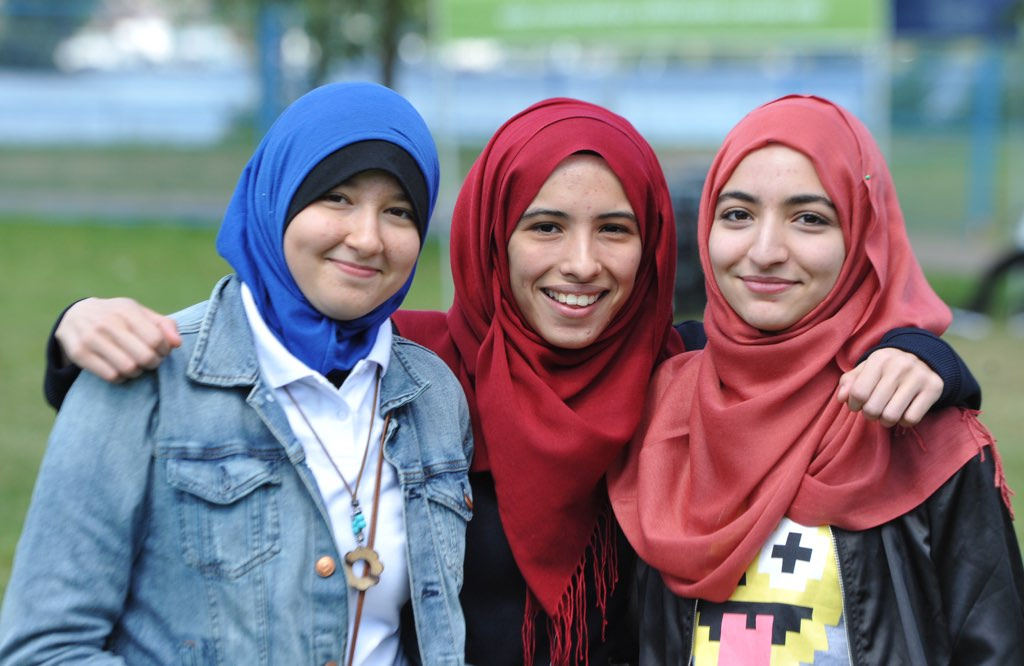
Sikhs who keep kesh, uncut hair, tie it in a joora and cover it with a dastar, or a patka for boys. Many Muslim women wear a hijab over the hair, ears and neck, in many styles. Many married Orthodox Jewish women cover their hair with a sheitel, a wig, or a tichel, a scarf. Christian nuns wear veils, and many Christian women once covered their hair in church. Whether coverings should be required or restricted is debated in several countries.
Wraps and caps
Headwraps are worn across Africa and its diaspora for celebrations, church and daily life: the gele in Nigeria, the duku in Ghana, the doek in South Africa. In Louisiana, the 1786 tignon law forced free women of colour to cover their hair, and they made the wrap a statement of style. The durag, a tied cloth cap, protects braids and sets waves, and satin bonnets protect hair at night.
Famous wrapped hairstyles



Still to be written: Turban.
Further reading
Photo credits on this page
The small pictures above come from Wikimedia Commons under free licences. Some are cropped to fit.
- Tignon: François Fleischbein, Public domain, source
- Dastar: Photography by Harkanwal Singh., CC BY-SA 2.5, source
- Jewish headcovering: David Shankbone, CC BY-SA 3.0, source
- Hijab: Sophie Barat, CC BY 2.0, source
- Durag: The original uploader was Calliopejen at English Wikipedia ., CC BY 2.0, source