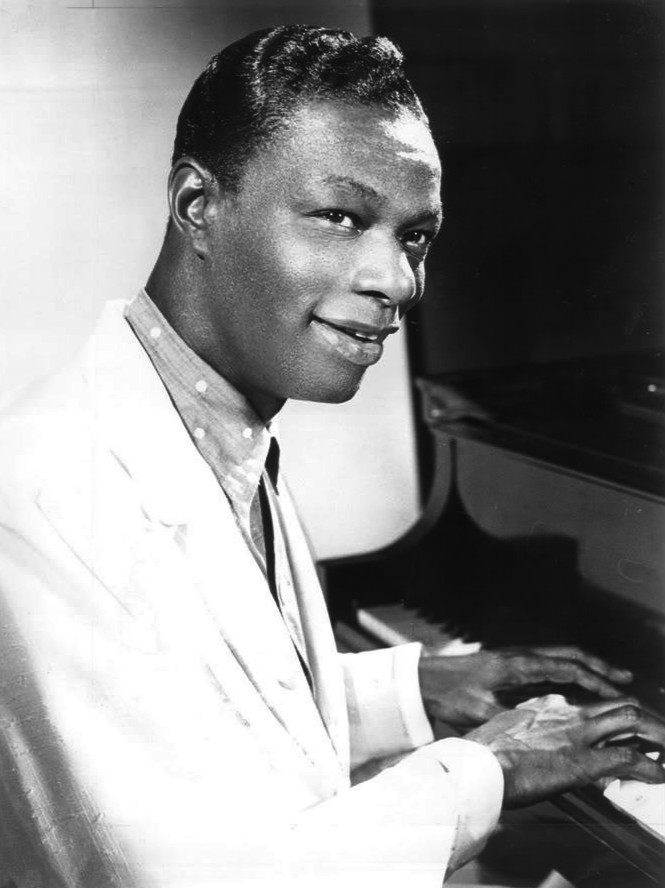
Pompadour
High-volume hair swept up and back from the forehead.
The pompadour features hair combed upward and backward to create significant height over the forehead. Originating in French court fashion, it became a global symbol of rock and roll rebellion in the 1950s through stars like Elvis Presley. Variations exist for men and women, often requiring styling products or false hair supports to maintain volume.
- Named after Madame de Pompadour despite differing from her actual style.
- Popularised by Elvis Presley and James Dean in the 1950s.
- Known as the Regent hairstyle in Japanese popular culture.
- Often supported by false hair rolls or heavy pomade.
- Associated with rockabilly, Chicano, and yakuza subcultures.
What it is
This style is defined by substantial vertical volume, with hair swept upwards from the face and worn high over the forehead. It may also be upswept around the sides and back. While the name references an 18th-century French figure, the modern look differs significantly from her actual low, backswept hair. Both men and women wear variations, ranging from sleek, greased-back looks to towering, structured updos supported by internal rolls or heavy product.
Where it comes from
Vertical volume trends began in the French royal court during the 1680s with the Fontange style, predating Madame de Pompadour. The term itself emerged in the 20th century. Women revived the look in the 1890s as part of the Gibson Girl aesthetic and again in the 1940s. Men popularised a greased version in the 1950s and early 1960s, driven by rock and roll icons. A resurgence occurred in the mid-2000s, keeping the style relevant across centuries.
What it means
In 1950s America, the pompadour signified youth rebellion and rock and roll culture, heavily influenced by movie stars and musicians. In Japan, it became a stereotype for gang members, including yakuza and bōsōzoku, often exaggerated in media. Among Latino communities in the US, particularly Chicanos, it served as a cultural marker from the 1930s to the 1960s. Today, it can signal affiliation with retro subcultures like rockabilly or psychobilly.
How it is made
For women, stylists often use a roll of false hair at the roots for support. The natural hair is backcombed or ratted at the sides towards the top, then combed up and over this base, away from the forehead. Men typically apply heavy pomade or Brylcreem to slick the hair back while maintaining height. The duck’s tail variation involves shaping the back into a point. Modern versions may involve cutting the sides short while leaving length on top for volume.
Who and what it suits
The style works with various hair textures but often requires thick hair or added supports to achieve the necessary height. It is adaptable for both men and women. Face shape suitability is not explicitly detailed in records, but the volume draws attention to the upper face and forehead. Those with fine hair may need significant product or structural aids like ratting to maintain the shape throughout the day.
Versions
The duck’s ass, or D.A., is a popular male variation where the back is shaped like a duck’s tail. In Japan, the Regent style is a stereotypical gangster look, sometimes combined with afro elements in the punch perm. Psychobilly fans wear a quiff or a wedge, which mixes a mohawk’s shaved sides with a slicked-back pompadour centre. Latin American variants show European influence and remain popular in specific communities.


Questions people ask about Pompadour
Did Madame de Pompadour actually wear this hairstyle?
No. Despite the name, she wore her hair low and backswept with no extra volume on top. The name was coined in the 20th century for a style that originated in French court trends of the 1680s and 1770s.
What products are needed for a men's pompadour?
Men traditionally use heavy styling agents like Brylcreem or pomade to grease the hair and hold it in place. These products help slick the hair back while maintaining the signature height and volume over the forehead.
How is the women's pompadour constructed?
It often uses a roll of false hair for support. The wearer backcombs their own hair at the roots, then combs it up and over the roll, pulling the sides back towards the centre to create a smooth, high arch.
Is the pompadour still worn today?
Yes. It saw a renaissance in the mid-2000s and remains popular in various forms. It is worn by men and women in the 21st century, often associated with retro fashion, rockabilly music, or specific subcultural identities.
Good reading and sources
- Pompadour (hairstyle) on WikipediaEncyclopedia
- More photos on Wikimedia CommonsPhotos
- Wikidata recordOpen data
The facts on this page come from the Wikipedia article "Pompadour (hairstyle)", written by its contributors and used under the CC BY-SA 4.0 licence, and from its Wikidata record (CC0). EveryHairstyle rewrote the text in its own words, with AI assistance, and compares every page with the article to make sure no passage is copied. It may be reused under the same CC BY-SA 4.0 licence with a link back.
It may contain mistakes, and figures change over time. Nothing here is investment or buying advice. If something is wrong, tell us. Last refreshed 2026-11-15.
Like Pompadour
All buns and updos 🇺🇸 United StatesBeehive
A conical updo piled high on the crown.Updo · Any hair · 1960
 WorldBun
A hairstyle where hair is gathered and coiled into a circular shape on the head.Updo · Any hair
 🇬🇧 United KingdomQuiff
A voluminous front sweep with short sides and back.Styled · Any hair · 1950
🇨🇳 China and 3 moreRattail
A long strip of hair at the napeCut · Any hair · 1980