
Braid
Interlaced strands of hair used for style and social signalling.
Braids are formed by weaving three or more hair strands together. This ancient practice appears in cultures globally, serving as a marker for age, status, and identity. From African cornrows to European crown braids, the style varies widely in technique and meaning.
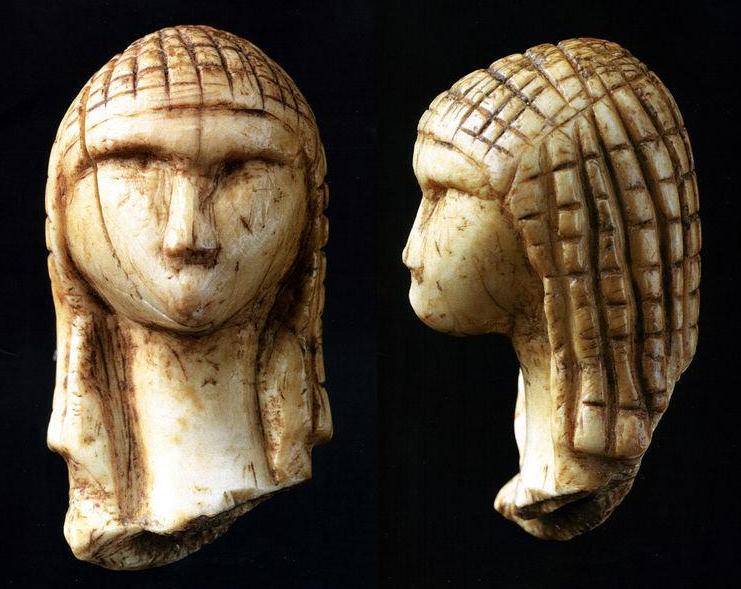
- Braids date back to at least 28,000 BCE based on figurine evidence.
- The CROWN Act bans discrimination against natural hair styles in some US states.
- Cutting braids has symbolized resistance in China and protest in Canada.
- Styles indicate social status, age, and marital status in many cultures.
- Braiding is a social activity that bonds elders with younger generations.
What it is
A braid consists of three or more hair strands woven together in a repeating pattern. The structure is typically long and narrow, with each strand moving through the others in a zigzag motion. Styles range from simple three-strand plaits to complex designs incorporating many strands. Hair can be added from the scalp or via extensions to create variations like French braids. Beads and shells are sometimes woven in for decoration. This style is worn by men, women, and children across many cultures.
Where it comes from
Evidence of braiding dates back tens of thousands of years. Statues like the Venus of Willendorf in Austria and the Venus of Brassempouy in France suggest early use. Braids were common in the Bronze Age across Western Asia, India, and China. Iron Age bog bodies in Northern Europe and later Celtic, Viking, and Slavic groups also wore them. Ancient Egyptians, Greeks, and Romans used braids extensively. In China, the Manchu queue was enforced during the Qing Dynasty until the early twentieth century. Japanese schoolgirls wore braids due to strict regulations until recently.
What it means
Braids often signal social information such as marital status, age, wealth, and community belonging. In many African cultures, specific styles identify ethnic groups or life stages. For Native Americans, braids could indicate warrior status or mourning. Cutting braids has served as a powerful symbol of resistance, such as against Qing rule in China, or as a tool of cultural erasure in Canadian residential schools. In some traditions, unbraiding hair signifies imminent death or deep grief.
How it is made
To create a basic braid, divide hair into three equal sections. Cross the right section over the middle, then the left over the new middle. Repeat this pattern down the length of the hair. For styles like French braids, add small amounts of hair from the scalp to each section before crossing. Tighter braids, common in Black culture, may cause initial discomfort but last longer. Knotless techniques reduce tension by incorporating natural hair gradually. Extensions can be sewn onto close braids for added length or volume.
Who and what it suits
Braids work with any hair texture, though techniques vary. Straight, wavy, curly, and coily hair can all be braided. In Black culture, tighter braids like cornrows protect the hair but require care to manage scalp tension. Alternative methods like knotless braids offer less strain. The style suits various face shapes depending on the placement, such as side-swept or halo braids. It is versatile for both short and very long hair lengths.
Versions
Many variations exist globally. African styles include cornrows, box braids, and twists. European traditions feature the crown or halo braid, known as Gretchenfrisur in Germany. Asian styles include the Chinese queue and Japanese mitsuami. Native American tribes have distinct forms like the Lakota two-braid style or Kiowa hair drops. Modern variants include goddess braids and boho braids, which use extensions for texture and volume. Crochet braiding allows for intricate ornamentation with added hair.
In culture
Braiding is a social art that fosters bonding between generations. Elders often teach children the techniques, preserving tradition. In the African diaspora, braids have become central to discussions on racial discrimination and cultural appropriation. Laws like the CROWN Act in California and New York now protect wearers from workplace and school bias. Braids also appear in equestrian sports, where horse manes are plaited for shows. In literature and psychoanalysis, cutting braids has been interpreted as a symbol of loss or defiance.


Questions people ask about Braid
What is the basic structure of a braid?
A braid is formed by interlacing three or more strands of hair. Each strand moves in a zigzag pattern through the others, creating a long, narrow structure. More strands allow for complex patterns, while adding hair from the scalp creates styles like French braids.
Why are braids significant in African cultures?
In many African ethnicities, braids identify specific groups, ages, and social statuses. Styles like cornrows and box braids have deep historical roots. They serve as social signifiers and are often created during communal gatherings, strengthening bonds between family members and generations.
How did braids function in historical China?
During the Qing Dynasty, Manchu men wore a queue, a long braid at the back with shaved sides. Han Chinese men were forced to adopt this style as a sign of loyalty. Cutting the queue became a symbol of resistance against Manchu rule and later ended with the fall of the dynasty.
Are there legal protections for wearing braids?
Yes, some regions have enacted laws to protect wearers. In 2019, California and New York passed legislation prohibiting discrimination based on natural hair and hairstyles. These laws address bias against braids, locs, and twists in schools and workplaces, particularly for Black individuals.
Good reading and sources
- The Rise of Knotless Braids (Published 2022)The New York Times, Article
- The 160-year mystery of Europe's Ice Age 'queens'BBC, Article
- Braid (hairstyle) on WikipediaEncyclopedia
- More photos on Wikimedia CommonsPhotos
- Wikidata recordOpen data
The facts on this page come from the Wikipedia article "Braid (hairstyle)", written by its contributors and used under the CC BY-SA 4.0 licence, and from its Wikidata record (CC0). EveryHairstyle rewrote the text in its own words, with AI assistance, and compares every page with the article to make sure no passage is copied. It may be reused under the same CC BY-SA 4.0 licence with a link back.
It may contain mistakes, and figures change over time. Nothing here is investment or buying advice. If something is wrong, tell us. Last refreshed 2026-11-15.
Like Braid
All braids and plaits EuropeRoman hairstyles
Ancient Roman hair fashions reflecting status and identityUpdo · Any hair
 🇬🇧 United KingdomLovelock
A single long braid worn over the left shoulder by 17th-century Europeans.Braid · Any hair · 1580
 🇺🇸 United States and 3 moreCornrows
Tight three-strand braids woven close to the scalp in straight or curved lines.Braid · Coily and kinky hair · 1902
 🇮🇳 IndiaPunjabi paranda
A multicoloured silk braid extension from Punjab.Adorned · Any hair