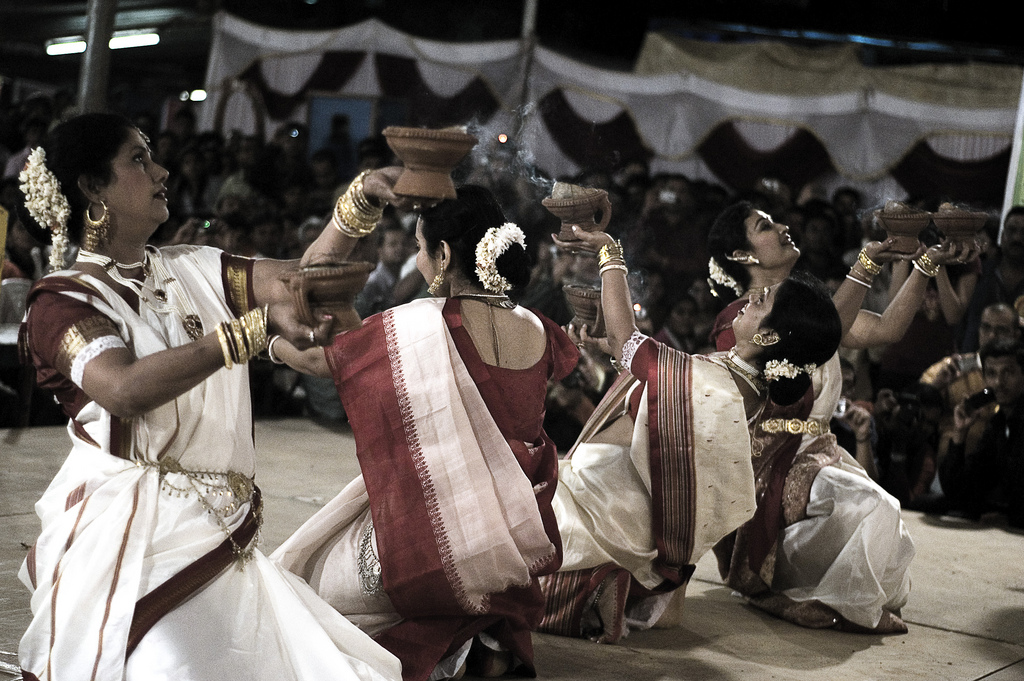
Gajra
Flower garland worn in the hair or on the wrist
A gajra is a floral chain used as a hair ornament in South Asia. Women wear it with braids or buns during weddings and festivals. Jasmine is the most common flower, though roses and other blooms appear too.
- Made mostly from jasmine but also roses
- Worn on buns, braids or wrists
- Common in India, Nepal and Sri Lanka
- Used for weddings and festivals
- Does not hold the hairstyle in place
What it is
This accessory consists of a string of fresh flowers. It serves as decoration for traditional hairstyles rather than a structural support for holding hair in place. The garland typically wraps around a bun or coils along a braid. While primarily a headpiece, it also appears as a wrist adornment during special events. The design relies on the natural beauty of the blooms rather than complex construction.
Where it comes from
The practice originates in South Asian cultures. It remains a staple in regions such as Maharashtra and Gujarat within India, as well as in neighbouring nations. The tradition has persisted through generations as part of customary dress for women. It connects to broader cultural habits of using fresh flora for personal adornment during significant life events and daily routines.
What it means
Wearing these flowers signals participation in festive or ceremonial life. It marks occasions such as nuptials and religious celebrations. The choice of fresh jasmine or rose reflects local agricultural availability and aesthetic preference. It acts as a visual marker of traditional identity and grace within the community context.
How it is made
To wear it, one prepares a bun or a long braid. The flower chain is then wrapped around the base of the bun or woven into the braid structure. It sits on top of the styled hair. No pins are strictly necessary for the garland itself, as it rests on the formed shape. For wrist wear, it is simply tied around the arm.
Who and what it suits
This ornament works with any hair texture since it sits on the surface. It requires enough length to form a bun or a substantial braid. Short crops cannot support the coiling method described. It complements traditional attire commonly found in South Asian fashion.
Versions
Jasmine is the standard flower choice due to its scent and white colour. However, artisans also use roses, crossandra, and barleria. These alternatives offer different hues and fragrances. The term also applies to a specific style of pearl jewellery craftsmanship in India, though this is distinct from the floral item.


Questions people ask about Gajra
What flowers are used to make a gajra?
Jasmine is the most common choice. Makers also frequently use roses, crossandra, and barleria flowers to create these garlands.
Does a gajra help hold a bun together?
No. It is purely decorative. The garland sits on the hairstyle but does not provide structural support to keep the bun in place.
Where is the gajra traditionally worn?
It is worn in the hair, specifically around a bun or coiled with a braid. It can also be worn on the wrist during celebrations.
Good reading and sources
The facts on this page come from the Wikipedia article "Gajra", written by its contributors and used under the CC BY-SA 4.0 licence, and from its Wikidata record (CC0). EveryHairstyle rewrote the text in its own words, with AI assistance, and compares every page with the article to make sure no passage is copied. It may be reused under the same CC BY-SA 4.0 licence with a link back.
It may contain mistakes, and figures change over time. Nothing here is investment or buying advice. If something is wrong, tell us. Last refreshed 2026-11-15.
Like Gajra
All adorned 🇨🇳 ChinaChinese hairpin
Traditional Chinese hair ornaments used to secure buns and signify status.Adorned · Any hair
 🇮🇳 IndiaPunjabi paranda
A multicoloured silk braid extension from Punjab.Adorned · Any hair
 🇺🇦 UkraineUkrainian wreath
Traditional floral headdress for Ukrainian girls and unmarried womenWrapped · Any hair
 🇪🇸 SpainPeineta
Large decorative comb worn under a lace veilAdorned · Any hair · 1800