
Crew cut
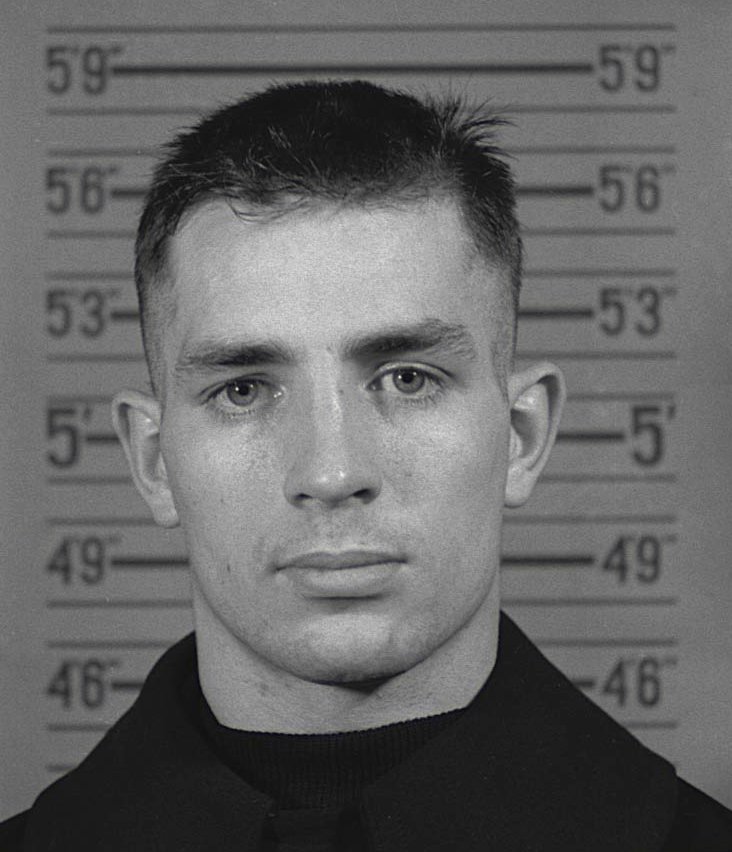
A short, graduated men's haircut with upright top hair.
The crew cut is a short male hairstyle where hair on top stands upright and tapers from front to back. It originated with university rowing teams for practicality and became a standard military look during the Second World War. The style offers a low-maintenance option that suits various face shapes through careful graduation.
- Named after university rowing teams who wore it for practicality.
- Became a standard military haircut during the Second World War.
- Top hair is graduated from longest at the front to shortest at back.
- Flat top variant was highly popular during the 1980s.
- Requires thick hair that stands upright for best results.
What it is
This haircut features upright hair on the crown that is cut short and graduated in length. The hair is longest at the front hairline, forming a small pomp, and becomes shortest at the back of the head. In profile, the top line appears nearly horizontal. The sides and back are tapered to a short or medium length. This structure creates a clean, angular silhouette that frames the face without covering the forehead extensively.
Where it comes from
Rowers at universities like Yale and Harvard adopted this style to keep hair out of their eyes while facing backwards in boats. Before electric clippers arrived in 1921, barbers found this cut time-consuming. It gained popularity among college students in the 1920s and 1930s. During the Second World War, military inductees received similar short cuts, cementing its association with service. The style declined in the 1960s but returned in the late 1970s, with the flat-top variant peaking in the 1980s.
What it means
Originally a practical solution for athletes, the cut came to signify discipline and conformity. Its widespread use in the armed forces linked it to duty and uniformity. In civilian life, it represented a neat, professional appearance suitable for warm weather. The contrast with long-haired football players of the late nineteenth century highlighted a shift towards streamlined, functional grooming standards in American sports and academic culture.
How it is made
Barbers begin by edging and siding to create a taper on the lower head. They may use shears or clippers to reduce initial length if needed. The top is shaped using a clipper-over-comb technique or freehand clipping. The comb sets the desired height, and the tool cuts hair above the teeth. The barber adjusts the front pomp height and the curve or flatness of the top to suit the client’s skull shape and facial features.
Who and what it suits
Thick hair that naturally stands upright works best for this style. Men with thinner hair can wear it if their head shape is suitable. The cut is versatile because the barber can adjust the arch or flatness of the top to balance wide foreheads or specific facial structures. It requires a head shape that supports the horizontal outline of the upright hair in profile.
Versions
The butch cut is similar but has uniform length on top rather than graduation. The Ivy League cut is a longer version, often measuring one and a half inches at the front. The flat top creates a level plane across the crown instead of a rounded shape. These variations fall under the broader category of buzz cuts, offering different levels of length and styling precision while maintaining short sides.
In culture
Newspapers in the 1930s and 1940s frequently featured this haircut in sports sections, linking it to athletic success. It appeared in popular press caricatures contrasting mop-haired footballers with close-cropped rowers. The style remains a staple in barbering manuals, representing a classic American aesthetic. Its resurgence in the 1980s showed its adaptability to changing fashion trends while retaining its core structural elements.



Questions people ask about Crew cut
Why is it called a crew cut?
The name comes from university rowing teams at schools like Harvard and Yale. Rowers sat facing backwards, so they kept hair short to prevent it from blowing into their faces during races.
What is the difference between a crew cut and a butch cut?
A crew cut has hair on top that is graduated in length, being longer at the front and shorter at the back. A butch cut has hair of a uniform short length across the entire top of the head.
Who should wear a crew cut?
It suits men with thick hair that stands up easily. Barbers can adjust the shape to complement different face shapes and skull structures, making it versatile for many individuals seeking a low-maintenance style.
Good reading and sources
The facts on this page come from the Wikipedia article "Crew cut", written by its contributors and used under the CC BY-SA 4.0 licence, and from its Wikidata record (CC0). EveryHairstyle rewrote the text in its own words, with AI assistance, and compares every page with the article to make sure no passage is copied. It may be reused under the same CC BY-SA 4.0 licence with a link back.
It may contain mistakes, and figures change over time. Nothing here is investment or buying advice. If something is wrong, tell us. Last refreshed 2026-11-15.
Like Crew cut
All cuts 🇷🇸 Serbia and 4 moreBuzz cut
A very short, uniform haircut made with clippers.Cut · Any hair · 1890
 🇺🇸 United States and 3 moreHigh and tight
A military crew cut with shaved sides and a short top.Cut · Any hair · 1980
 WorldFlattop
Short sides with a flat, upright top.Cut · Any hair
 🇬🇧 United Kingdom and 2 moreUndercut
Long top hair with shaved or buzzed sides and back.Cut · Any hair · 1910